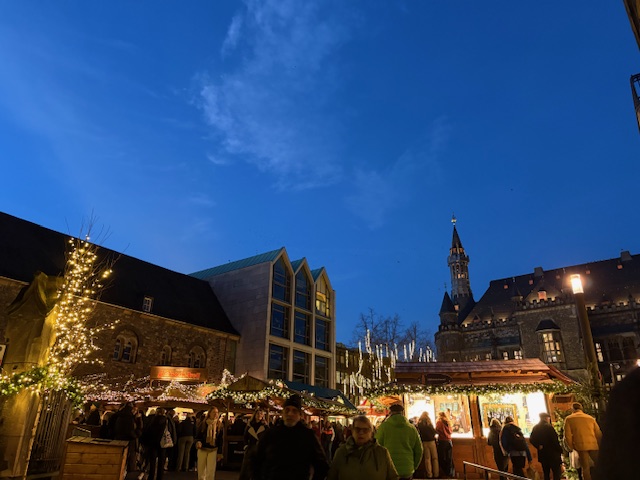
Here’s what peace looks like. Two views of Aachen

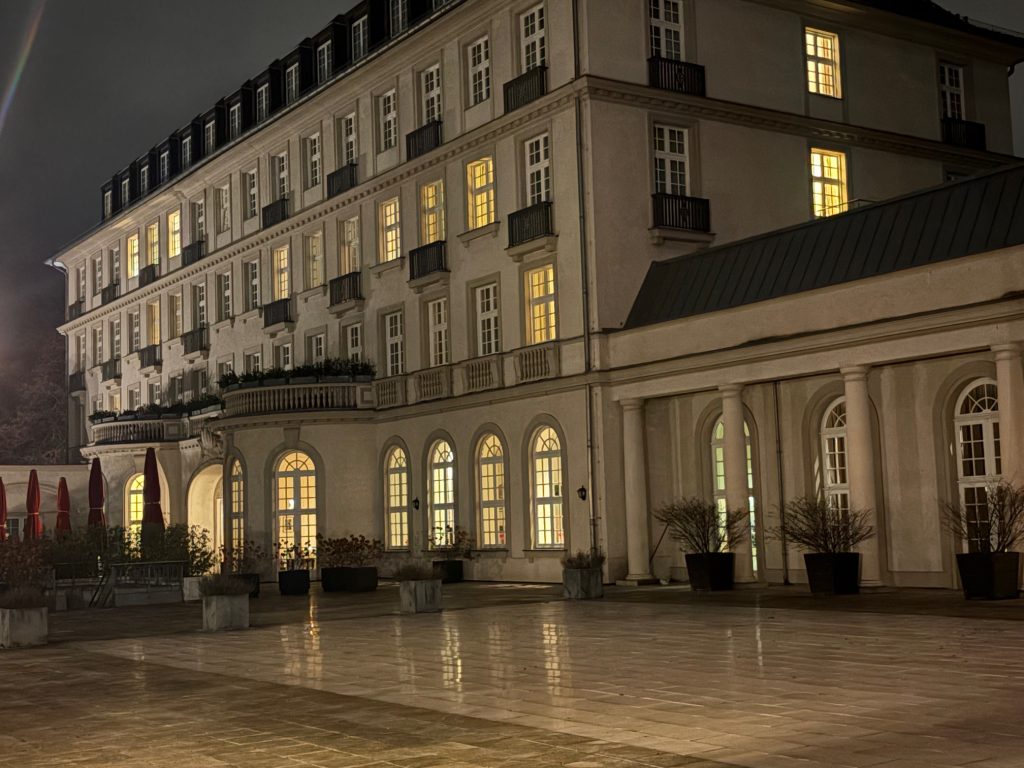
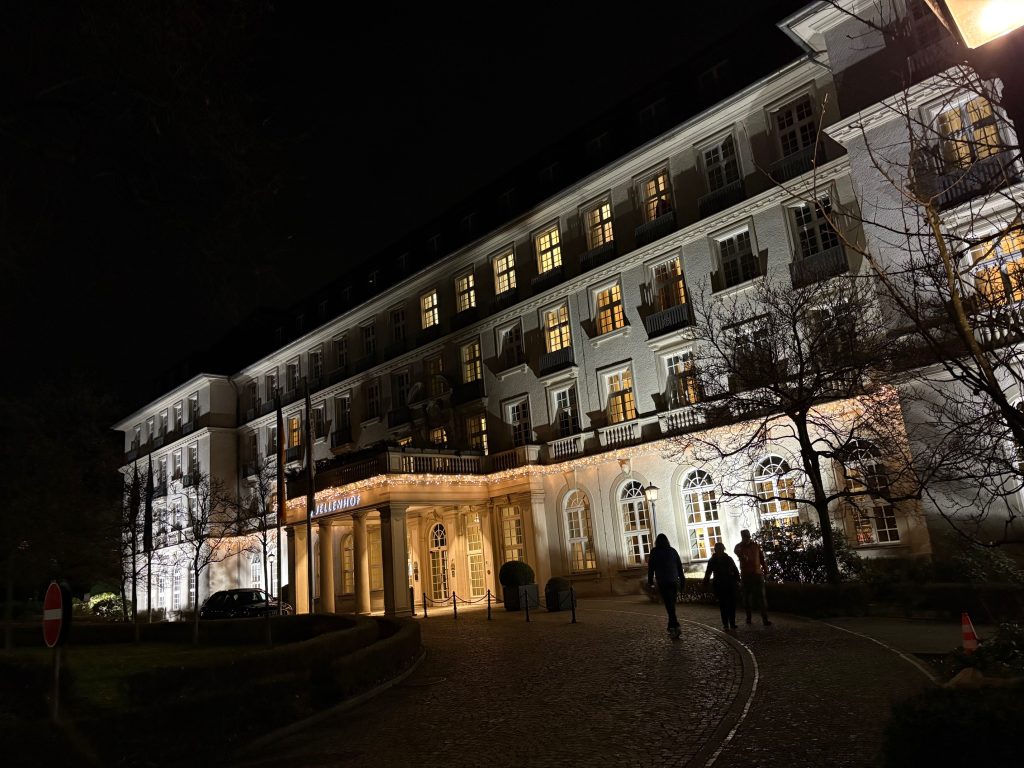
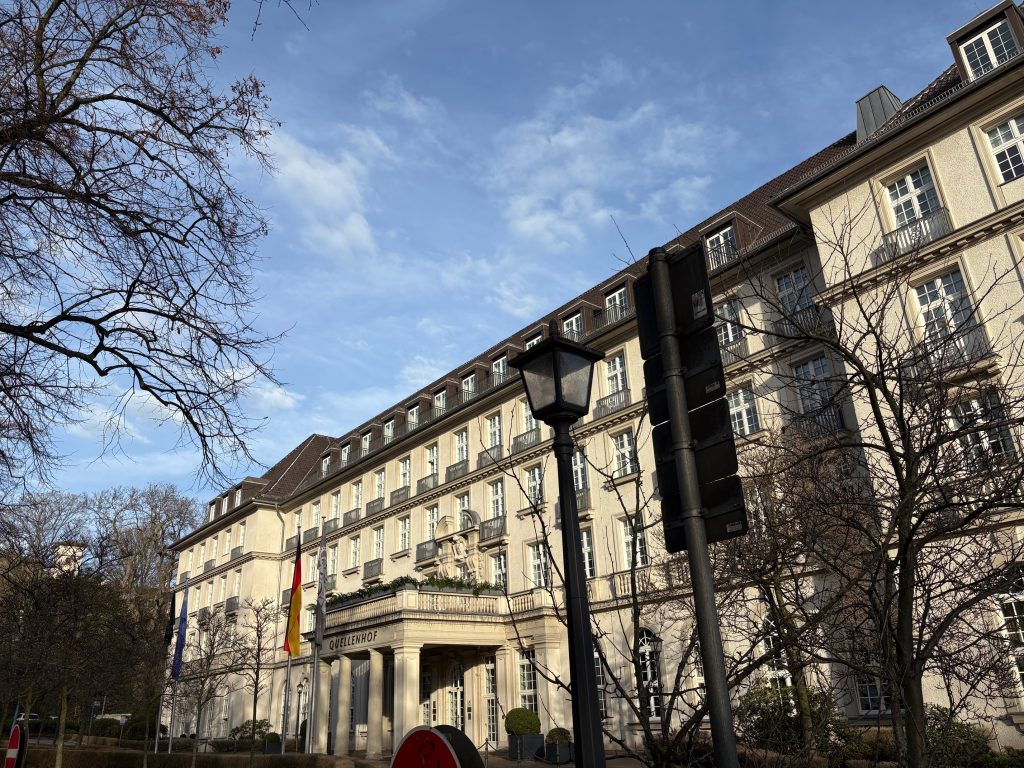
The city’s best hotel, Quellenhof 1944 vs 2025
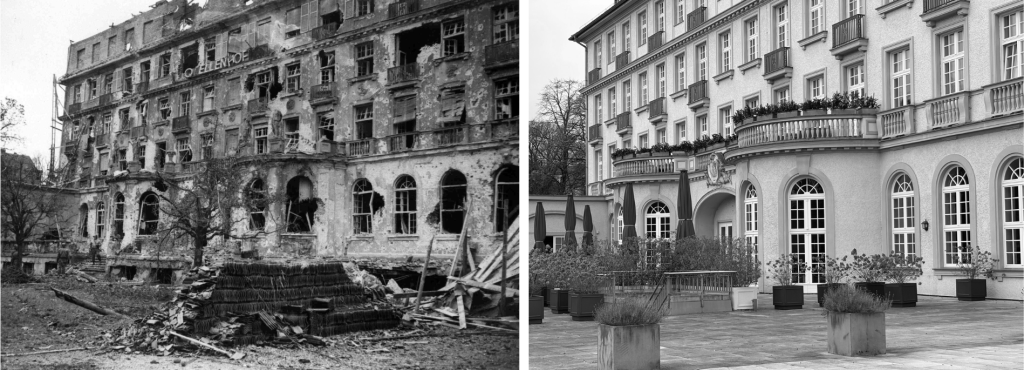
The Quellenhof Hotel on Oct. 25, 1944. AP Photo from Alamy. (Right) The same part of the hotel today. Photo: Rashmee Roshan Lall
Think of Aachen the next time you hear mention of the Trump administration’s National Security Strategy (pdf).
That document expressed grim satisfaction the US would henceforth support European “patriotic parties”, which are trying to cultivate “resistance to Europe’s current trajectory”.
Today’s Aachen, in the west of Germany, is a testament to that very trajectory, one of peace. The European Union (EU) was founded after World War II as a “peace project” and Aachen has thrived as a result.
In 1944, Aachen was piles of rubble, the scene of one of World War II’s most significant battles. For eight days, it endured street-by-street fighting. Quellenhof Hotel, the city’s finest, was badly damaged.
Aachen was part of the Siegfried Line, Germany’s main defensive network on its western border. It was considered key by Hitler, who ordered German forces to hold the city at all costs.
As it turned out, Aachen became the first major German city to be captured by the Allied forces. The Americans arrived.
Philip W. Blood, a British military historian who lives in Aachen, describes the battle of Aachen as “one of the hardest fought of the war”. It destroyed much of the city, he says, and “Aachen was declared a ‘dead city’ by the US Army in October 1944”.
Take a look at Aachen then and now. This is what peace looks like…81 years of uninterrupted peace. The chance to build back better and build anew, to create new rhythms of community life, new collectives, shiny new ‘traditions’.
In fact, Aachen city is a testament to much more than the simple act of reconstruction. It shows that painful memories too can be consigned to the past and friendship between peoples celebrated. From 1918 to 1929, Aachen came under Belgian military occupation but today, the #14 bus from the Elisenbrunnen H3 stop, regularly carries Aacheners to Eupen, in the Belgian province of Liège. Presumably, the people of Liège reciprocate with similar friendliness, holding no grudges for Aachen’s past role as a crucial launch point for the German Army’s 1914 assault on Liège.
As Dr Blood points out, the swift German advance “soon descended into widespread atrocities. As the military pushed forward, Aachen’s municipal officials followed, tasked with enforcing a colonial-style regime over the occupied territories”. He writes, “By 1915, Germany not only waged a brutal war on the front lines but also imposed terror in the occupied lands. Thanks to its proximity to neutral Holland and its military hospitals, Aachen became a centre for prisoner exchange negotiations with Britain. By the war’s end, the city was overrun with retreating German troops and civilians fleeing potential Allied retribution”.
Assuredly, both victim and oppressor would have to do a lot of work to deal with the fallout of the past.
Unsurprisingly, memories of war are deeply embedded into Aachen’s psyche, possibly more than other German cities. After all, Aachen actually experienced direct foreign rule as well as everything else.
And yet, the great European peace project means the #14 bus takes you to Belgium next door and the #350, also from the Elisebrunnen H3 stop, to The Netherlands.
Aachen is a portrait of the peace dividend.
Below, the Quellenhof hotel in October 1944. It had served as a Luftwaffe hospital during World War II, in October 1944. And the same aspect of the hotel today. The Quellenhof seems to have changed its entrance to the other side (see other photos with the sign). Photos: Rashmee Roshan Lall
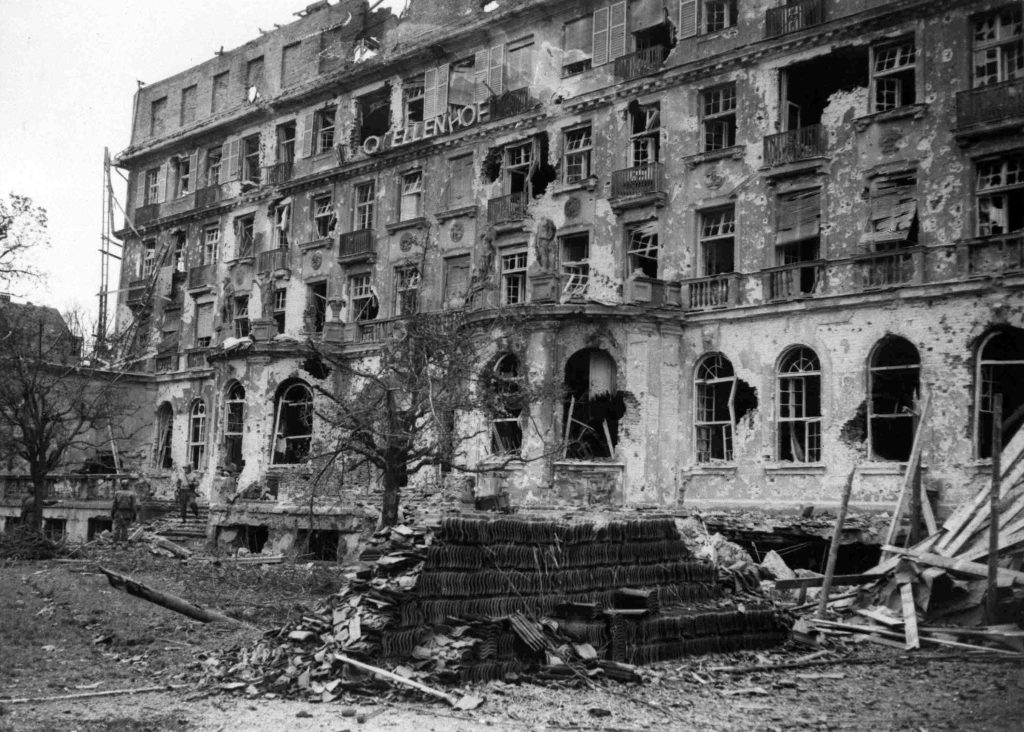
American troops, left, outside the Quellenhof Hotel, in Aachen, Germany, on Oct. 25, 1944. The building was used as the Nazi headquarters in the town. AP Photo from Alamy
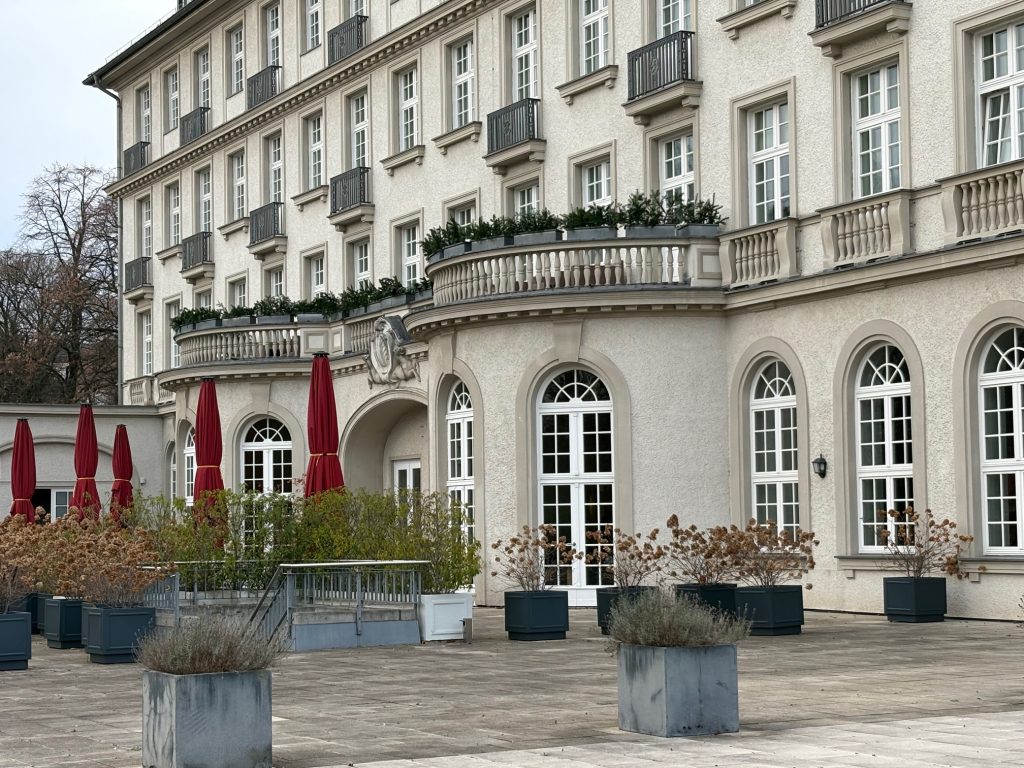
The same aspect of the hotel today. The Quellenhof seems to have changed its entrance to the other side (see other photos with the sign). Photos: Rashmee Roshan Lall
These sites also have relevant photos from the dark days of World War II:
Welt: Aachen’s last defenders commemorate their beloved German homeland. https://www.welt.de/geschichte/zweiter-weltkrieg/article254081402/Deutsche-Westfront-1944-Letzte-Verteidiger-Aachens-gedenken-ihrer-geliebten-deutschen-Heimat.html
Trolley Mission: Historical photo from the Second World War: House at Guaitastraße 1 in 52064 Aachen. https://www.trolley-mission.de/de/historisches-foto-zweiter-weltkrieg-guaitastrasse-1-in-52064-aachen