A quest for Croatia’s Shakespeare, Marine Držić

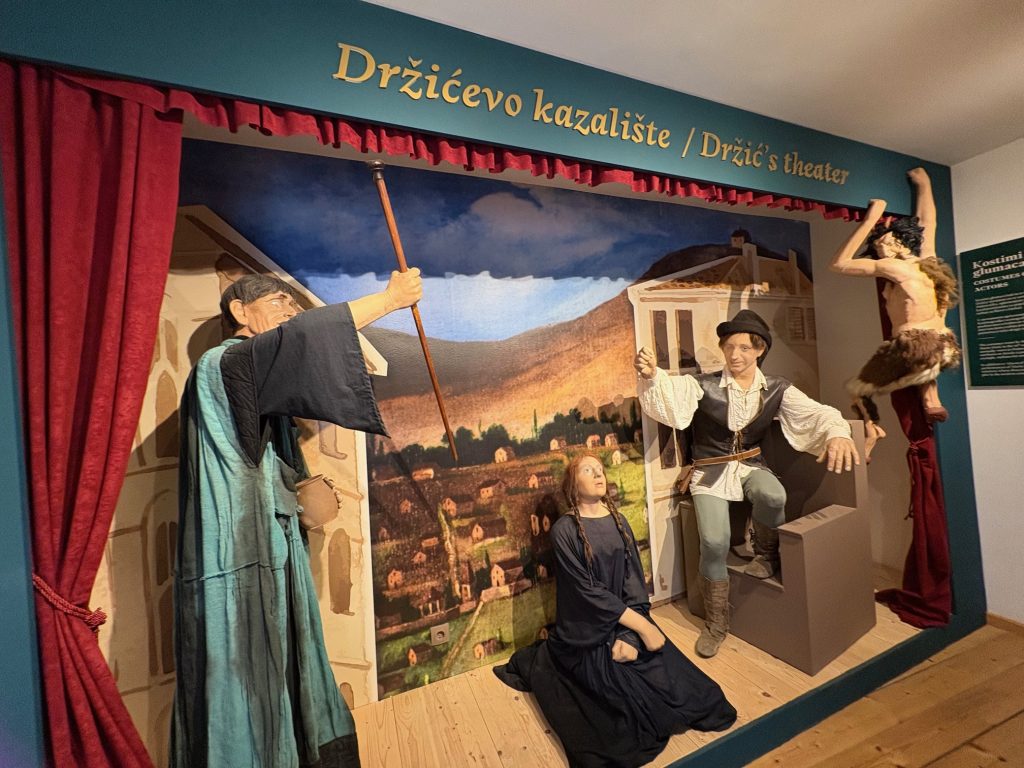
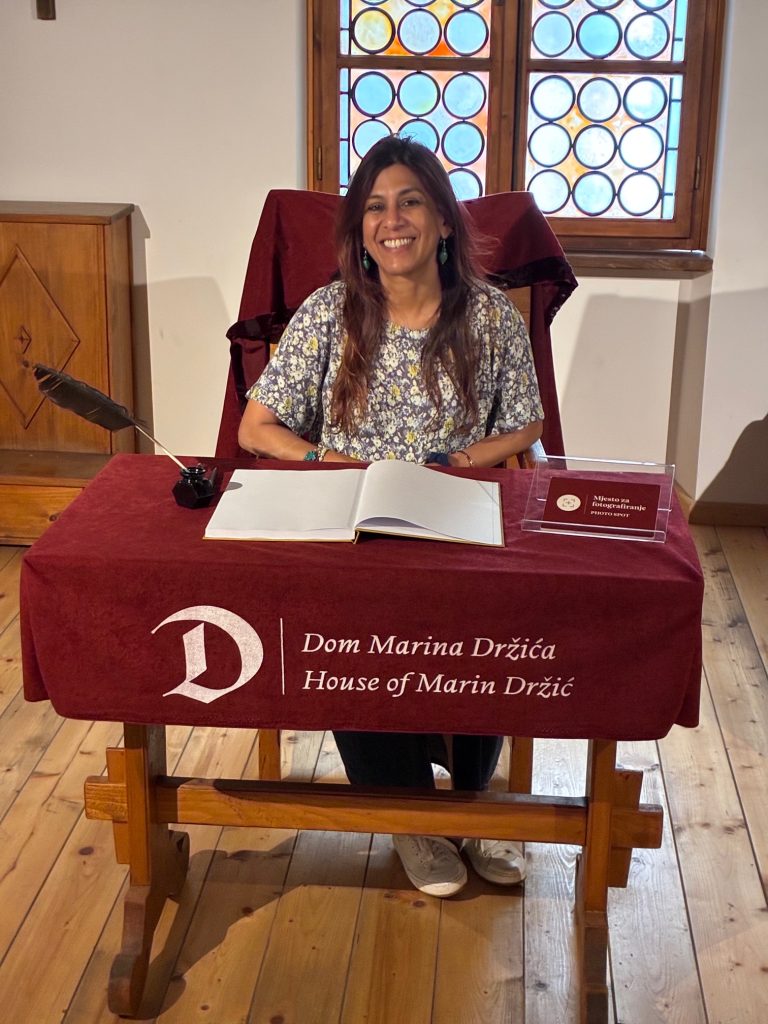
House of Marin Držić. Photos: Rashmee Roshan Lall
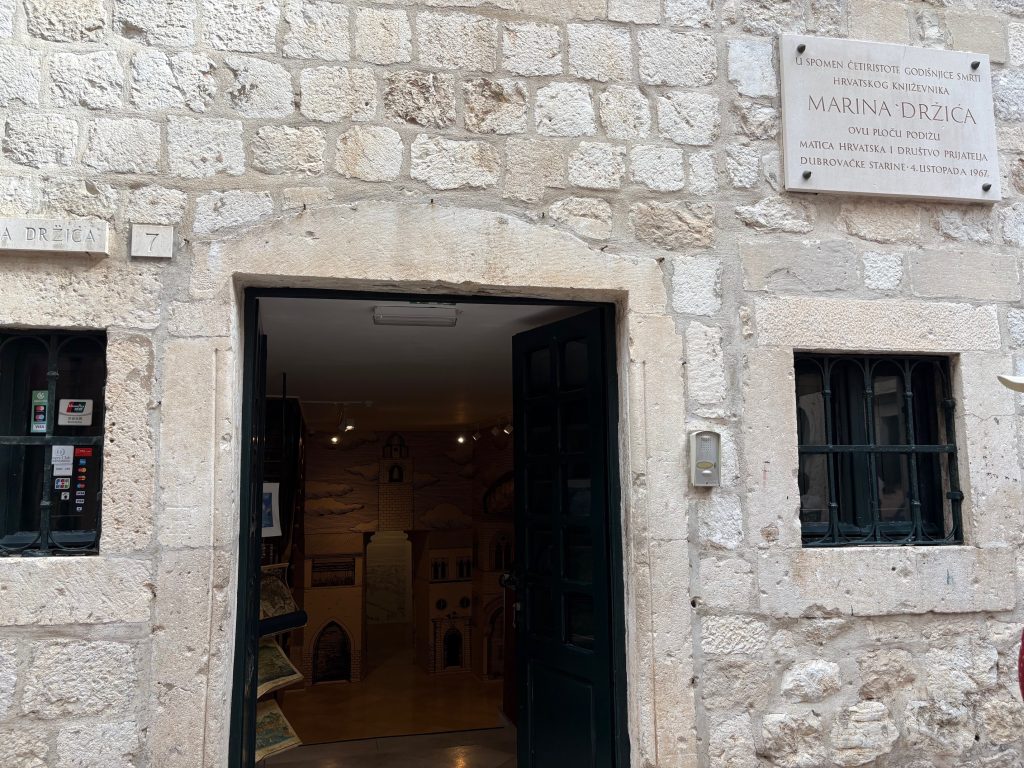
Operating on the principle that you can glimpse the soul of a city by reading its writers, I was grateful to be given a thumbnail sketch of the life and works of Marin Držić within hours of arriving in Dubrovnik.
Dario Borovina, who owns the 17th century building that now serves as a wonderful bed and breakfast in the Old City, was kind enough to point me towards Držić. The 16th century playwright, he said, is often described as Croatia’s Shakespeare.
After investigating Držić’s themes, his treatment and framing of them, as well as visiting his house (which is now a museum), I realised Mr Borovina may have been a tad modest about the stature of Dubrovnik’s famous literary son.
Držić, who’s considered the greatest Slavic Renaissance playwright, is undoubtedly to Croatia what Shakespeare is to England. But he is also to Croatia what Dante is to Italy and Cervantes to Spain.
I lie. There is a difference.
The works of Dante, Cervantes and Shakespeare are widely available in multiple languages. They are considered the literary greats of the entire western world, not just for native readers of the languages in which they wrote. So, the writings of Dante, Cervantes and Shakespeare have travelled across borders both linguistic and geographical, over oceans and deserts, up high mountains and even into space.
Držić has barely made it out of what some might call the Slavo-sphere.
Nearly 600 years after he sent out into the world a stream of poems, pastorals, plays and pamphlets rooted in Dubrovnik, only a very few of his works have been translated into other languages.
Even the House of Marin Držić, the museum founded in 1989 to celebrate Dubrovnik’s favourite writer, has only a scant selection of his translated plays. When I visited, there were three or four that had been rendered into English by Filip Krenus, a couple of French versions and, if I remember right, one German translation. A quick search on the Kindle store revealed that no English version of a Držić play was available in that format.
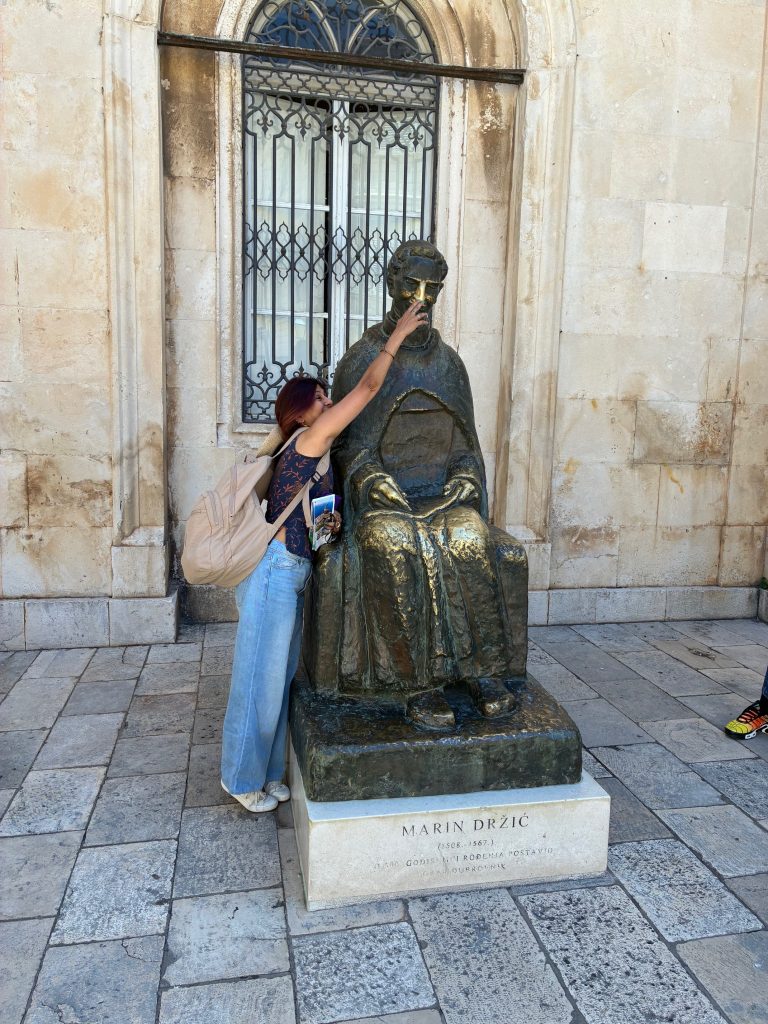
And yet Držić appears to provide a reliably Instagrammable moment for the swarms of visitors who crowd Dubrovnik at the height of the season. Shoals of young people stop at his statue in the Old City and rub its nose. They’re literally turning Držić into gold! As the last photo shows (scroll down please), your correspondent did so too, all the while silently begging pardon from the great man for taking this liberty.
Even so, hardly any of the nose-rubbers would be able to say who Držić was. Nor why Dubrovnik has placed his statue so prominently in the heart of its tourist enclave.
Does it matter that much of the world neither knows about Držić nor can easily access his work?
Yes.
I think it’s worth knowing that Držić, like Shakespeare, addressed universal themes. Greed, love, deception, revenge, Držić dealt with them all. That he did so, like Shakespeare, within the political and social parameters of his times.
It’s also worth knowing that he did his work with verve and wit.
That his vivid characters were actually drawn from real people, say, the cobblers, inn keepers, needle salesmen and others who lived in Dubrovnik in the 1500s. That they were often recognisable to the audience of the day, as ‘fictional real-life’ characters. And that it wasn’t considered a monstrous act on the part of the writer to portray living people so accurately they could be instantly tagged (in the pre-industrial, pre-tech, pre-social media sense of 16th century Dubrovnik). It’s interesting to consider how Držić’s persistent use of real-life characters collides with the modern taboo on eroding individual privacy.
Držić was a chronicler of his city and its times, say, like Naguib Mahfouz or Alaa Al Aswany for Cairo, respectively in the 20th and 21st century.
But the most important reason to know of a ‘Croatian Shakespeare’ – and to be able to read their work – is to further the development of a more diverse and inclusive view of global cultural history.
All the world really is a stage! It’s worth knowing that it’s vast and embraces many worldviews.