How the rights of Chagos peoples intersect with Trump, Farage politics

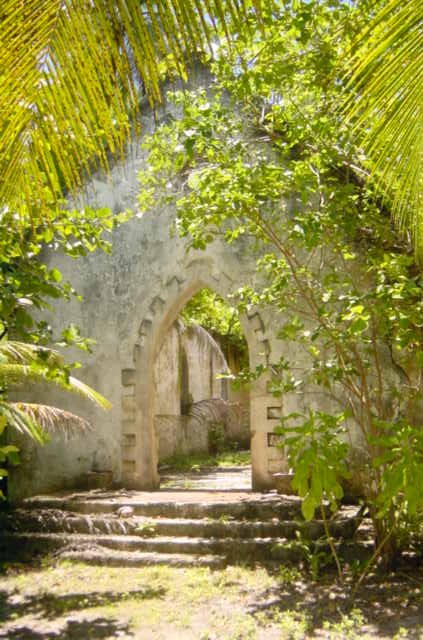
Abandoned church on an atoll on the Chagos Islands. Photo by Dunog. Public Domain
You couldn’t make it up. A former London bus driver is inserting himself into the debate over the British-administered Chagos Islands in the Indian Ocean by trying to argue the archipelago is his ancestral home and that he agrees with Donald Trump and Nigel Farage’s position it be retained by the UK.
The Continent, a pan-African digital newspaper, has that spiffing story (click here to read) having spoken to 47-year-old Misley Mandarin, who styles himself “interim first minister” of Chagos.
The events playing out in Chagos and around the islands underlines the extraordinary intertwining of far right British politics with neo-imperialist Trumpian America and the use of powerful and emotive arguments about homeland, belonging, decolonisation and self-determination.
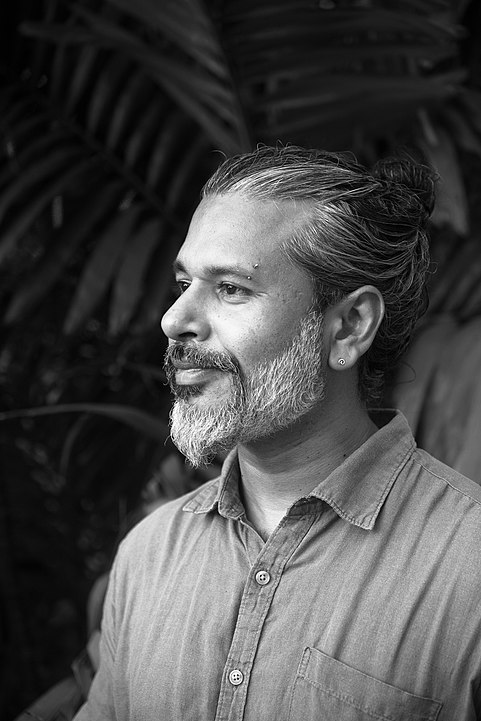
Mr Mandarin, who recently left the UK for a deserted atoll in the Chagos, is Chagossian. His 72-year-old father, Michel, was one of the 1,500 displaced from the archipelago as a teenager in the late 1960s when the UK and US governments were establishing a military base on Diego Garcia. The Chagos Islands became British territory along with Mauritius in 1814. They were designated as British Indian Ocean Territory in 1965 and detached from Mauritius, which became independent in 1968.
The Chagossians, who now live mainly in Mauritius, the Seychelles and the UK, are fighting to return to the islands.
It is a valid struggle but the manner in which testy issues of decolonisation and self-determination have been hijacked by the far-right is an interesting case study.
Mr Mandarin, for instance, appears to have a very legitimate claim to speak about the Chagos Islands on account of his father. Having left Mauritius for the UK, and now based on that Chagos atoll, the “interim first minister” argues with some justification that a treaty negotiated between Britain and Mauritius unfair to people like him. The treaty arranges for the return of the islands to Mauritius but does not make any binding provision for the Chagossians’ resettlement there.
That said, Britain too is correct in wanting to want to abide by the 2019 International Court of Justice ruling, which directed that sovereignty of Chagos should be transferred to Mauritius “as rapidly as possible”. It also seems fair that Britain pay an average of £101-million a year to maintain a lease on Diego Garcia.
Even so, Britain should’ve made better provision for people like Mr Mandarin and his father in the treaty. That is why Mr Mandarin opposes Britain ceding control of the Islands, at least for now. It’s not clear what, if anything, he thinks about the fact that Britain will be violating international law and illegally occupying the islands if it does not abide by the court ruling, nor the terms of the treaty.
Mr Farage’s Reform Party is heavily involved in the issue though it’s fair to say the far right rarely seems interested in people like Mr Mandarin other than as likely figures in a culture war revolving around race and immigration.
According to The Continent, Mr Mandarin, his father and two other Chagossians arrived at Peros Banhos atoll with former army officer Adam Holloway, who recently defected from the Conservatives to Reform. They had travelled in a vessel from Sri Lanka and their journey and regular supplies are paid for by British-Thai businessman Christopher Harborne, a big donor to Reform. The Continent said that Mr Farage, himself, has tried to access the atoll to deliver “humanitarian” supplies, been denied and subsequently posted a video expressing outrage at the turn of events.
In an interesting sequence, two days after Mr Mandarin and the others arrived at the atoll, Mr Trump withdrew approval for the UK-Mauritius transfer treaty.
The returned Chagossians have been allowed by a British court injunction to stay on the Peros Banhos atoll until next week. On March 13, there will be another hearing and the issue will come back into the headlines.
Complete with the high drama that we must expect from a matter of home and hearth, justice and self-determination.