The film that hollers this message: China is the caring superpower

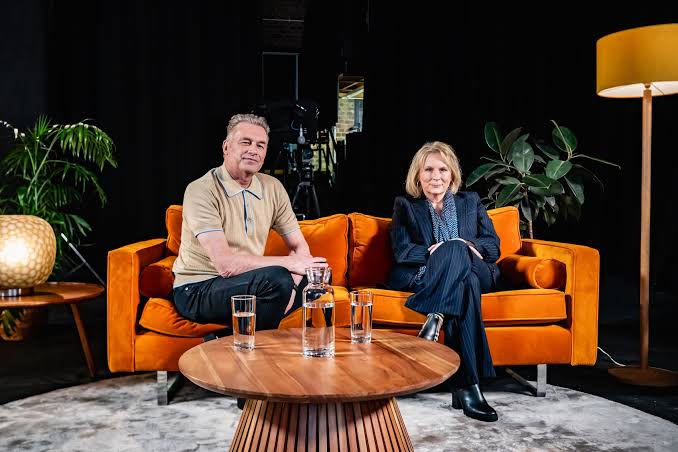
Chris Packham and Jennifer Saunders in People’s Emergency Briefing, a searing 50-minute film on the climate crisis
On an ordinary Wednesday evening in east Greenwich, an extraordinary thing happened. Nearly 200 people gave up two hours of their leisure time to travel to a church, watch a film and then discuss how it made them feel. That was pretty extraordinary but even more so, was part of the message we heard: China is the responsible superpower in the world today.
The film, People’s Emergency Briefing, runs for 50 minutes and makes two clear points:
- Climate change is already affecting us here in Britain
- And we, the people, have the power to lead our leaders towards urgent action
Somewhere in there was a snapshot of how China is dealing with the climate crisis. It was compelling.
I won’t go into details about the film, for which I was honoured to be discussion facilitator. It features Jennifer Saunders being Everywoman and saying the sort of things you might expect when faced with shocking detail about the sewage and waste being dumped into England’s rivers (just 14 per cent of surface water bodies have good ecological status). You can read all about the film on the National Emergency Briefing website. In fact, you can even bring a screening to a community venue near you!
But here is a key takeaway from the film screening: It shows China as the caring superpower. China, we find out, is the force that doesn’t want the world to burn fossil fuels to the point we all frizzle.
There was data on the speed and determination of China’s push to renewables – 50 per cent of its energy; nearly half the cars on its roads.
The film was clear that China is able to do this because it’s not a democracy. An autocratic system doesn’t have to grapple with democratic dissent on any proposed disruption of infrastructure and processes.
That said, actions do matter. If the Chinese leadership is taking the country down the right path, it has to be a good thing, surely?
I was reminded of the point made by Professor Steve Tsang, Director of the SOAS China Institute and co-author of a new book China’s Global Strategy under Xi Jinping.
That strategy, according to the professor, is both ambitious and smartly angled.
China wants solid support from the Global South, to use the term that encompasses all the world beyond the geopolitical West.
This would be primarily based on President Xi’s conception that the liberal international order is inherently undemocratic. It is currently of, by, and for an elitist West, which represents a minority of United Nations member states and the global population.
That is a powerful and persuasive point. It’s one that most countries would cleave to, not least giants such as India, Turkey, Nigeria and Brazil.
Turkey is hardly a democratic model. India is sliding down international democracy rankings due to increasing pressure on civil liberties and political dissent under Prime Minister Narendra Modi and the Bharatiya Janata Party government. Even so, India and Turkey’s call for comprehensive reform of the United Nations Security Council (UNSC) would have purchase in large swaths of the world. So too their insistence the veto power should be removed from the UNSC’s five permanent members: China, France, Russia, the United Kingdo, and the United States.
The world order, as India and Turkey (among others) see it, remains skewed and inherently unrepresentative and undemocratic.
That’s exactly in line with Mr Xi’s view. Of course, India would hardly champion Chinese leadership of the new world order. It would, however, probably join in tipping over the old one!