I bring you glad tidings. Germany’s Christmas markets are alive and well

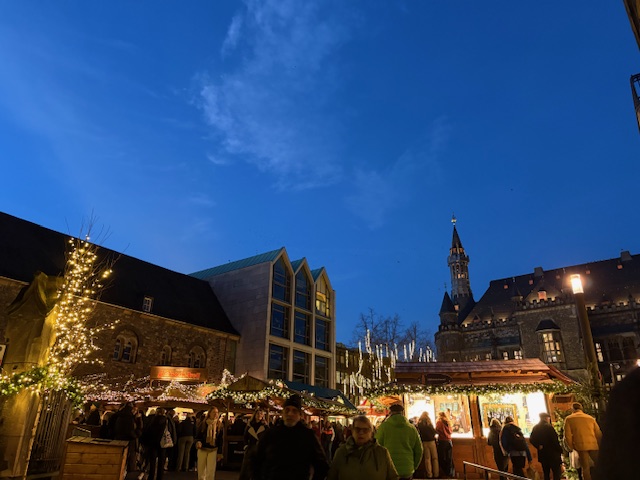
With German police recently arresting five men over an alleged plot to attack a Christmas market in Bavaria, I bring particularly glad tidings from North-Rhine Westphalia some 600 km away.
The annual tradition of the Weihnachtsmarkt, Adventsmarkt or Christkindlmarkt appears to be alive and well.
Many will be glad to hear it. Just recently Deutsche Welle, Germany’s international broadcaster, had to debunk a viral claim that all Christmas markets in Germany had been cancelled. It was a scurrilous attempt to win another front in the culture wars by abseiling off the back of rising security costs for Christmas markets following the 2016 Berlin and 2024 Magdeburg attacks and landing right on top of a beloved tradition. Except that the claim fell flat.
Had it been true, it would’ve been a serious matter. Germany hosts more than 2,500 Christmas markets every year and they draw millions – customers, gawkers and sellers.
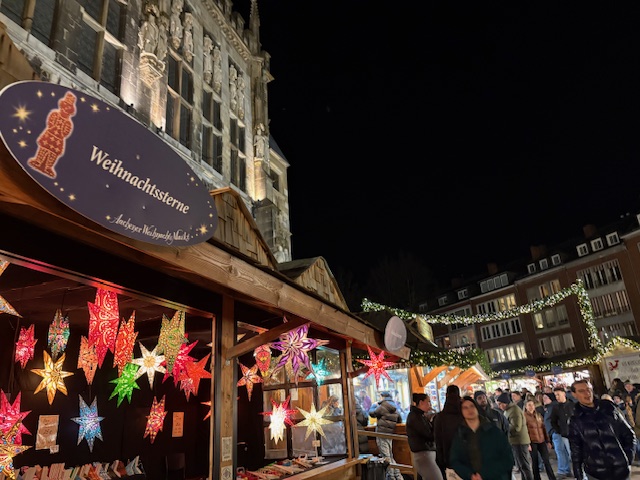
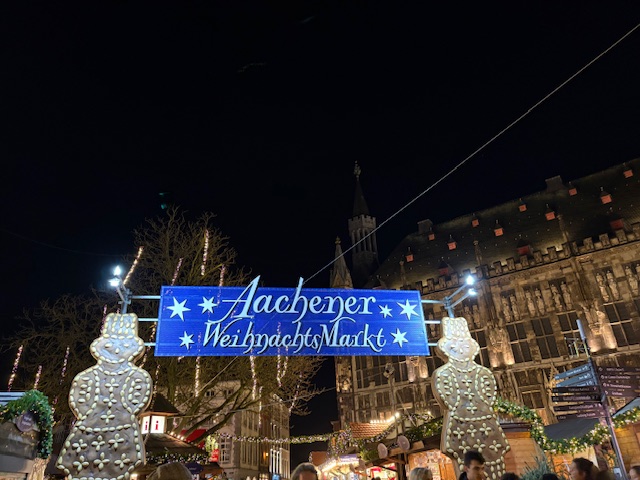
Your correspondent, in the Christmas market in Aachen, witnessed it brimming over with seasonal cheer. There are stacks of the city’s signature gingerbread, Aachener Printen, slices of fresh apfelstrudel and giant servings of quarkbällchen (normally, they’re walnut-sized and like a donut hole made with Germany’s signature cottage cheese-like product). The stall run by Nobis, the city’s most famous bakery, also has Aachen’s other original, streuselbrötchen. So does Moss, the rival baker. Anecdotal evidence suggests Aachen has two teams of believers: the Nobis streuselbrötchen-ites and the Moss streuselbrötchen-ites. Never has a roll made of yeast dough and topped with a streusel mix of butter, sugar and flour been such contested territory.
There is “XXL bratwurst” the length of my forearm, reibekuchen (thick pancakes of grated potatoes) and trays and trays of pommes smothered any way you like.
The spiral kartoffeln is very popular. Sometimes called rotato potato or chips on a stick, the street food is big in many parts of the world and may have been imported here from South Korea.
Everything is washed down with beer or gluhwein weiss/rot (made with white or red wine). The stalls run a brilliant and simple system – everyone charges one price, more or less (typically, 4.50 euro a pop with a 3.50-euro refundable deposit when you return the mug). So they don’t compete on price but on taste!
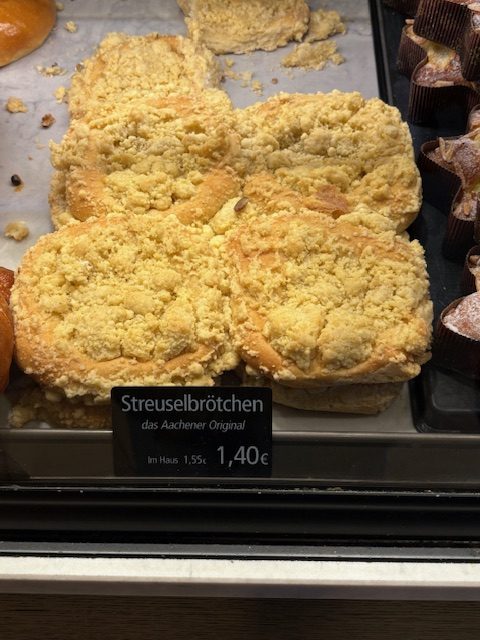
An Aachen original: Streuselbrötchen