In Canada, once again the debate over faith in public life


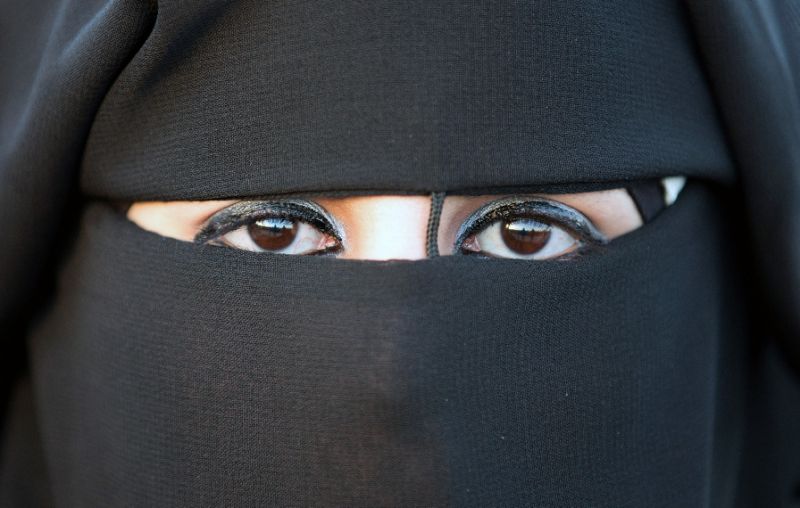
Photo by Denise Jans, Unsplash
Next week, Canada’s highest court will consider the future of a seven-year-old secularism law that bars some public sector workers in Quebec from wearing religious attire at work.
The issues at hand are, to put it mildly, controversial. Of late, I’ve noticed a surge in traffic and commentary to an 11-year-old blog: More heat than light in Canada’s election debate on the niqab. Here’s why.
I think I understand the reason people are re-reading that piece with renewed interest and commenting with fervour. The constitutional challenge to the Quebec law, which is known as Bill 21, has caused an almighty kerfuffle and it could go on in various ways depending on the outcome.
The legal challenge comes from 13 entities. These include the Canadian Civil Liberties Association, the National Council of Canadian Muslims, the World Sikh Organization of Canada and the English Montreal School Board.
The challengers say that the law punishes them for being visibly Muslim, Sikh or whatever else and it’s just not fair.
Those in favour of Bill 21, including Quebec Premier François Legault, say it is the best way to maintain secularism and neutrality in public life, as it promotes the principle of “vivre ensemble” or co-existence.
That is true enough. In terms of creating a plain vanilla flavour of public life and service, rules that prevent the visual, audible and other sensory measures of airing difference play an important role. We don’t notice differences quite as much if they aren’t tagged, so to speak. By that token, such rules keep things ticking over pretty non-controversially.
Even so, some of the arguments against Bill 21 would benefit from being addressed.
For instance, some Muslim women, who wear the hijab or headscarf, say they feel othered by the law. So do Jews and Sikhs in Quebec.
The chief concerns of all of these religious minorities are the effects of Bill 21 on their lives and prospects.
Interviews conducted by academic Nadia Hasan among at least 400 Muslim women in Quebec are revealing. The majority believed the law affects their chances of getting a job. More than half said they experienced racist remarks or prejudice at work. And some of them said Bill 21 made it more necessary (rather than less) to stay within the confines of the Muslim community for work. That would suggest the law prevents religious minorities from integrating with wider society and the broader jobs market.
There will be examples to the contrary but these are still valid concerns.
The trouble is being valid doesn’t make such issues easier to resolve in any satisfactory way for all parties.
For starters, Quebec appears to have a track record on plain vanilla public life. The province purged the church from its control of public institutions such as schools and hospitals nearly 70 years ago. In fact, Bill 21 emerged out of an attempt to tread a middle path.
Quebec tried to both welcome newcomers and religious minorities as well as to uphold secularism in public institutions. In response to calls for a French-style ban on public school students from wearing religious attire, Quebec decided on requiring public servants to eschew religious symbols.
In many ways, that feels like a reasonable decision. Many diverse societies will watch what happens in Canada with interest.
Some 250 years after the English philosopher and social reformer Jeremy Bentham put forward his theory of ethics – utilitarianism – there is much to recommend the principle of the greatest happiness of the greatest number.