The EU brand becomes a bit less shiny

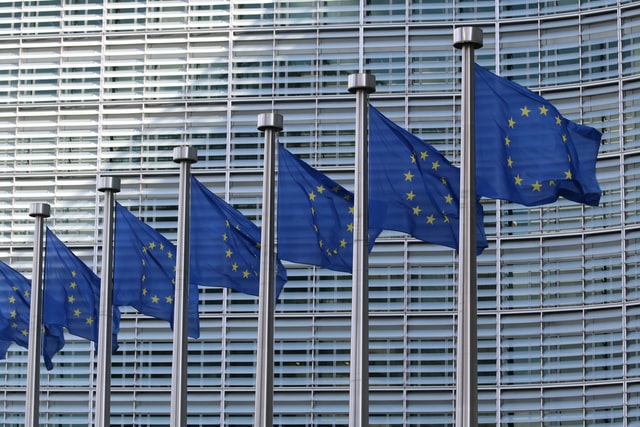
The European Commission, the EU’s main executive body, in Brussels. Photo by Guillaume Périgois on Unsplash
Is the European Union (EU) brand losing its appeal?
The world’s largest single market and trading bloc has been dealt two stinging rebukes in the past week.
On August 29, Iceland voted against resuming talks on joining the EU, 13 years after they were broken off by a Eurosceptic government that came to power in Reykjavik.
On September 2, the UK’s new prime minister Andy Burnham named steelmaking and farming as key domestic sectors that needed protection from Europe. British steel, he said, could face “significant problems” as a result of a “Made in Europe” procurement plan being drawn up in Brussels.
To be portrayed as a protectionist, even predatory, neo-imperial force is rather a dismal semisesquicentennial birthday present for the shiny, happy idea of European collaboration. The bloc came into being in 1951 as the six-country European Coal and Steel Community. The EU has long advertised ever-closer union and strength in numbers as an attractive notion.
And yet Iceland has walked away from it, yet again.
And Britain, which shocked the world a decade ago with Brexit, is engaging in tough talk.
What gives?
It stands to reason that Iceland balked at even the faintest possibility that fishing rights might be threatened. After all, fish and marine industries account for nearly 40 per cent of its exports and Iceland is known to have been fierce in defence of its fisheries. From the 1950s through to the 1970s, Iceland and the UK engaged in the Cod Wars. These sound jokey and comedic until you realise they involved serious actions, such as deploying warships, slicing trawling gear, ship-ramming and severing diplomatic ties.
Even so, what price Atlantic cod when Iceland itself might be under threat? While it’s a founder member of the Nato military alliance, Iceland has no army. Four years into Russia’s full-scale invasion of Ukraine, Iceland is in a precarious position. Its support for Ukraine has led Icelandic officials to voice alarm over an increase of Russian maritime manoeuvres in the island’s vicinity. And Donald Trump’s loudly-expressed interest in acquiring Greenland, another Arctic island, has prompted concerns in Iceland. Accordingly, Prime Minister Kristrún Frostadóttir’s centre-left government brought forward from 2027, the referendum on reopening EU talks.
Being a part of the EU should technically have served as an insurance policy of sorts for Iceland. In fact, the August 29 referendum wasn’t even a vote to join the EU; just to resume the 2013 accession talks. Joining the EU would’ve required yet another referendum.
But Iceland said no, with a turnout of 82.5 per cent, the highest in any Icelandic election since 2009.
It was an emphatic rejection. Clearly, Iceland felt that even to assent to talks would be to slide down a slippery slope – of ceding control of its own destiny.
Britain’s circumspect attitude towards European regulations might be easier to explain considering it was the first country in the then 28-member EU to leave the bloc.
But, a decade on, EU officials say the UK is pushing for a wider strategic reset with the bloc. And yet Prime Minister Burnham is pushing hard for special favours to Britain. He wants the UK to be incorporated into an EU scheme intended to protect European manufacturing from Chinese competition. This suggests the UK doesn’t believe the EU holds all the cards.
With Iceland’s rejection, the EU brand becomes a bit less shiny. Brussels has long sold membership as a security blanket and protection against an unpredictable world. It promised strength in numbers, arguing that it was worth the loss of some aspects of control over borders, workers, regulations and economic levers. The EU advertised its model of democracy and prosperity as rational and reliable.
And yet, as an EU official told Politico on condition of anonymity, “Even a frozen country doesn’t want to be a part of the EU.”