What Trump’s letter to new Americans does not say

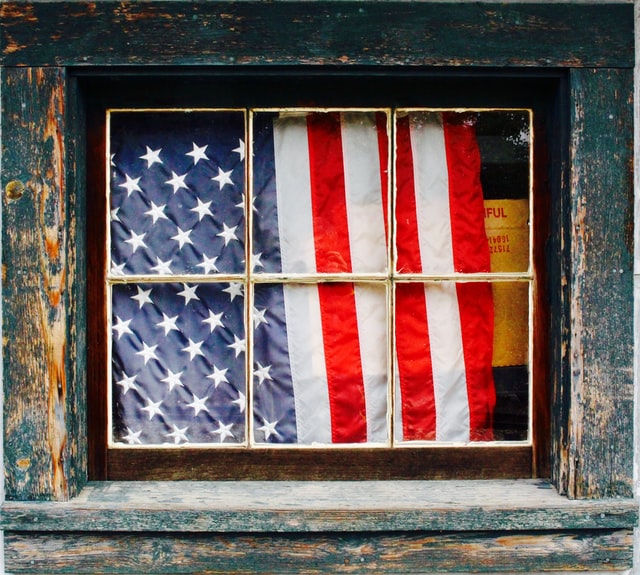
As a naturalised American, I found Donald Trump’s letter to new citizens particularly interesting because its focus was a changeless culture rather than a changeless idea.
The greeting, a form letter, is an articulation by America’s leader of their conception of the country. In a sense, it’s the vision thing, the idea of America in a few paragraphs. For a new resident, it’s a handy guide from someone who might be presumed to know, to everything they need to mentally navigate their forever home.
Typically, American presidents speak about ideals and values such as democracy, the importance of community and civic engagement. All of that ties in to the civics studies a new citizen will have already undertaken in order to pass the naturalisation test.
Not so Mr Trump. He sees America as little else than a monoculture.
The Atlantic recently put together the sentiments expressed by some of Mr Trump’s predecessors.
Joe Biden saluted the new citizen as follows: “In making this journey to America, you have done more than move to a new place. You have become part of an idea”.
Bill Clinton expressed humility about America’s “great experiment”. The new citizen, he wrote, was now part of “a nation dedicated to the ideal that all of us are created equal, a nation with profound respect for individual rights”.
George W. Bush exalted the “grand and enduring ideals” that unite Americans “across the generations”.
Barack Obama spoke of “a nation united not by any one culture, or ethnicity, or ideology but by the principles of opportunity, equality and liberty that are enshrined in our founding documents”. He celebrated the new citizen’s uniqueness: “Like the millions of immigrants who have come before you, you have the opportunity to enrich this country through your contributions to civic society, business, culture and your community. You can help write the next great chapter in our American story”.
Mr Trump has written very differently. His letter to new citizens veers away from grand ideals. While still welcoming to the new citizen, Mr Trump offers a view of America as a nation characterised by tradition, culture and history.
He writes: “America has always welcomed those who embrace our values, assimilate into our society, and pledge allegiance to our country. By taking this oath, you have forged a sacred bond with our Nation, her traditions, her history, her culture, and her values”.
Fine, perhaps, so far as that goes, but American studies’ experts note the lack of any reference to the intellectual nature of the American project.
Surely that is key?
Nearly two centuries ago, French diplomat Alexis de Tocqueville travelled around America and studied its social and political manifestations in everyday life. He was admiring of the country’s willingness to move on from whatever had gone before, something we would call change-worthiness today. “America is a land of wonders,” he wrote, “in which everything is in constant motion and every change seems an improvement”. He added that the minds of citizens had to “be brought together and held together by some principle ideas”.
Rather than perfection preserved in amber, he said, “the greatness of America lies not in being more enlightened than any other nation, but rather in her ability to repair her faults”.